WELCOME
  • Home
  • Biology
    • Matter and Energy >
      • Honors Matter and Energy
      • Burning Ethanol Lab
    • Molecules of Life >
      • Biomolecules
      • Digestion Biosynthesis
      • Microscopes
      • Cell Labs
    • Cellular Respiration >
      • Mealworm Labs
    • Cancer and the Cell Cycle >
      • Hematopoiesis
      • HLA Matching
    • The Central Dogma >
      • Double Helix
      • HONORS: DNA to Proteins
      • Yeast Sphere Lab
    • Genetics >
      • Mendelian Genetics
      • Meiosis
      • Pedigree Analysis
    • Evolution >
      • Battling Bacteria
      • Mouse Evolution
      • Speciation
      • Evidence of Evolution
    • Plants >
      • Plant Labs
    • Ecology >
      • Animal Flash Cards
      • Nutrient Cycles
      • Human Impacts on Environment
      • Carbon Pools Reading
  • SEP labs
    • Transformation >
      • Transformation Procedure
    • HLA Sequencing
    • PCR
    • ELISA
    • DNA Extraction Cards
  • Data
    • Graphing
    • Relationships in Data

Biomolecules

Honors level material is in italics.

Biomolecules

All living things are made of cells and all cells are made of biomolecules. There are four main categories of biomolecules:
  • Lipids 
  • Carbohydrates
  • Proteins
  • Nucleic Acids
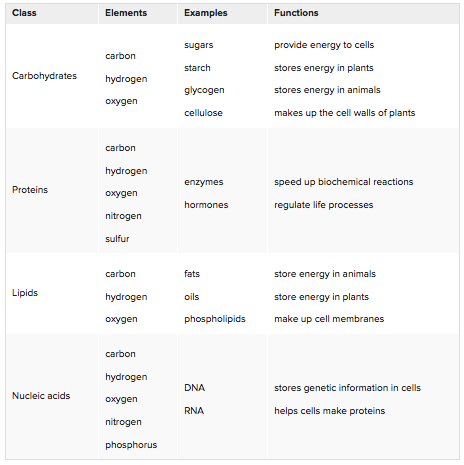
​​Biomolecules are the molecules that make up living things and thus, these molecules are all organic molecules. All biomolecules contain atoms of carbon, hydrogen, and oxygen. ​As such, all biomolecules contain high energy C-C and C-H bonds.
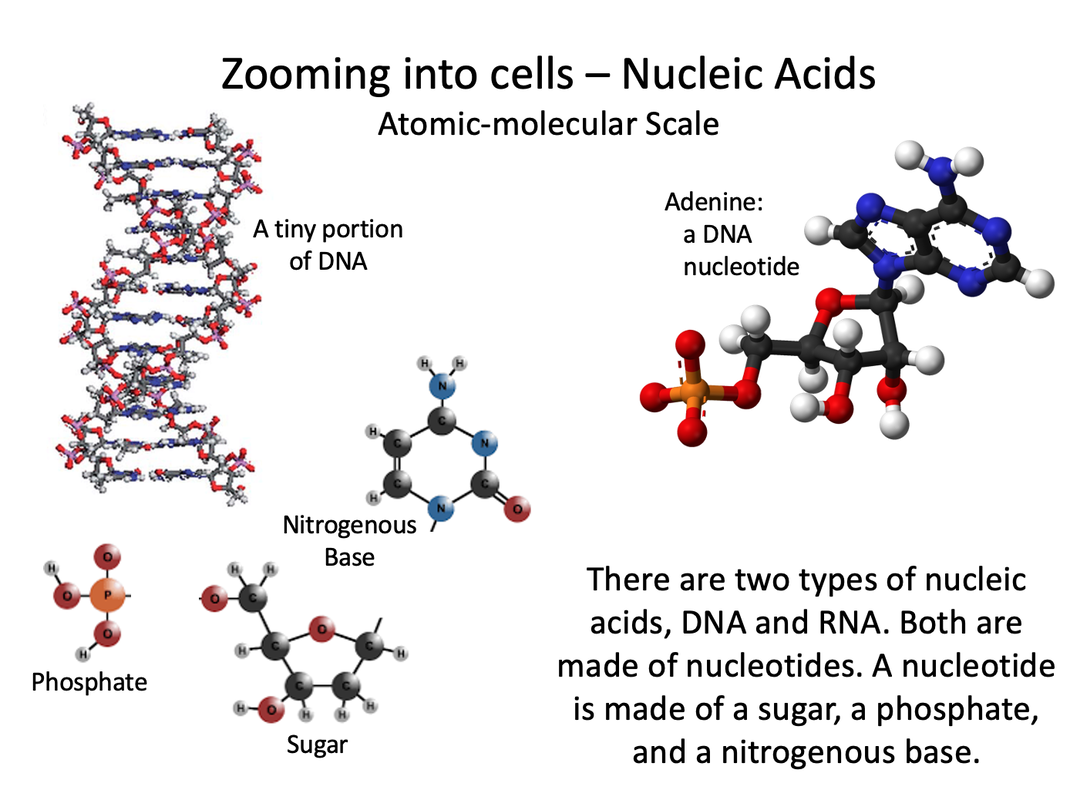
In addition to carbon, hydrogen, and oxygen, proteins also contain nitrogen and nucleic acids contain both nitrogen and phosphorus.

​Biomolecules are mostly large molecules, made by joining smaller molecules together to make large macromolecules (macro = large). Macromolecules are also called polymers. A polymer (poly = many) is a molecule that is made of many smaller molecules. The smaller molecules are called monomers (mono = one).
Picture

Monomers and Polymers

In the same way that molecules are made of atoms, polymers are made of monomers. 

​Monomer:
  • A monomer is a small, basic unit or molecule that can bind to other monomers to form a larger structure.
  • Monomers are often simple molecules with that can link together through chemical reactions.
  • Examples include glucose (a monomer) which can link to form polysaccharides like starch or cellulose, and amino acids (monomers) that can link to form proteins.
Polymer:
  • A polymer is a large, complex molecule made up of repeating monomer units.
  • Polymers are formed through a process called polymerization, where many monomers join together in a chain-like structure.
  • They can be natural, like DNA and proteins, or synthetic, like plastic and nylon.
  • The properties of a polymer depend on the types of monomers used and the way they are linked together.

Lipids

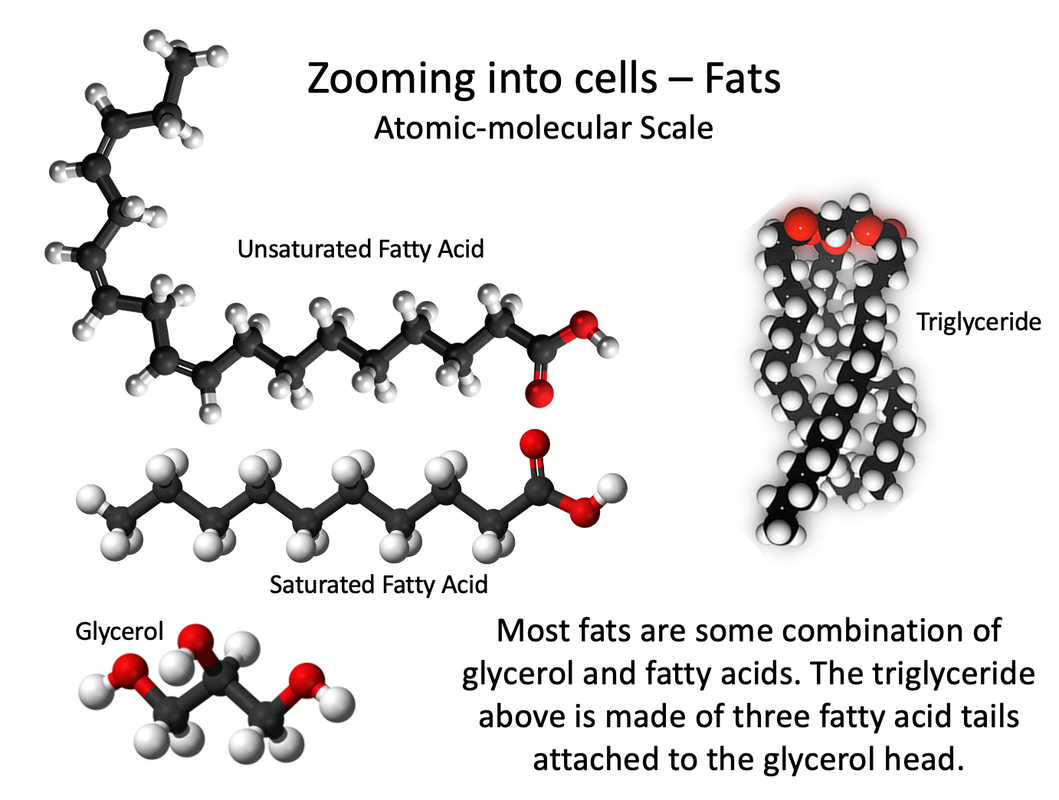
Lipids are molecules that do not dissolve in water. They are very important because they store energy, build cell membranes, and send signals in the body as chemical messengers. Many lipids are made of two main building blocks: glycerol and fatty acids.

​Fats and oils are the most commonly found lipids in nature. These lipids are also called triglycerides. A triglyceride is made of one glycerol attached to three fatty acid chains. This type of lipid is used by animals, plants, and even some bacteria to store energy. Fats are solid triglycerides, while oils are liquid triglycerides. The difference between fats and oils comes down to the fatty acids that are bonded to the glycerol. 

​Fatty acids can be either saturated or unsaturated. Saturated fatty acids have straight carbon chains filled with hydrogen atoms. Because their carbon chains are straight, they pack tightly together, which makes saturated fats, like butter, solid at room temperature.

Unsaturated fatty acids, on the other hand, have bends in their carbon chains caused by double bonds. These bends keep them from packing tightly, so triglycerides made with unsaturated fatty acids, like olive oil, are liquid at room temperature. A double bond can form when two hydrogen atoms are removed. As these are not saturated (filled to the max) with hydrogen atoms, we call them "unsaturated."

​Another important type of lipid is a phospholipid, which is found in cell membranes. Phospholipids are similar to triglycerides, but one fatty acid chain is replaced with a phosphate group. Phospholipids are composed of a phosphate "head" and two fatty acid "tails." The fatty acid tails could be saturated or unsaturated. The ratio of saturated to unsaturated fatty acids found in the phospholipids greatly impacts the properties of the cell membrane. 

​​The phosphate “head” of the phospholipid is attracted to water (hydrophilic) while the fatty acid “tails” repel water (hydrophobic). When placed in water, phospholipids arrange themselves in two layers, called a bilayer. The hydrophilic heads face outward toward the water, while the hydrophobic tails face inward away from the water. This bilayer creates a strong barrier that helps control what goes in and out of the cell.
Picture
Picture
Picture
Picture
Cholesterol

​Some lipids, called steroids, look very different because they are made of carbon rings instead of chains. Examples of steroids include cholesterol, which helps keep cell membranes stable, and hormones like testosterone and estrogen. Cholesterol sits within the phospholipid bilayer that makes up the cell membrane. Cholesterol decreases the space between phospholipids, which helps the cell membrane maintain the right level of fluidity when temperatures change. 
Lipids can be identified with chemical tests. In the Sudan III/IV test, the red dye sticks to fat but not water. If no lipids are present, the test tube will only show one orange/pink layer. If lipids are present, two layers will form: a thin red/orange layer on top (fat) and a translucent light pink layer on the bottom (water). You should see red color on the top layer. This test is particularly difficult to interpret, especially with food where the solution is already milky/cloudy before mixing with Sudan III/IV. 

Another test is the emulsion test, where the sample is mixed with ethanol. If fats are present, the solution will turn milky or cloudy white when poured into water. Scientists often use both the emulsion test with the Sudan III/IV test together to make sure the results are accurate.
Picture
Emulsion Test: Left = negative, Right = positive
Picture
Combined Test: Left = positive, Right = negative
Picture

Carbohydrates

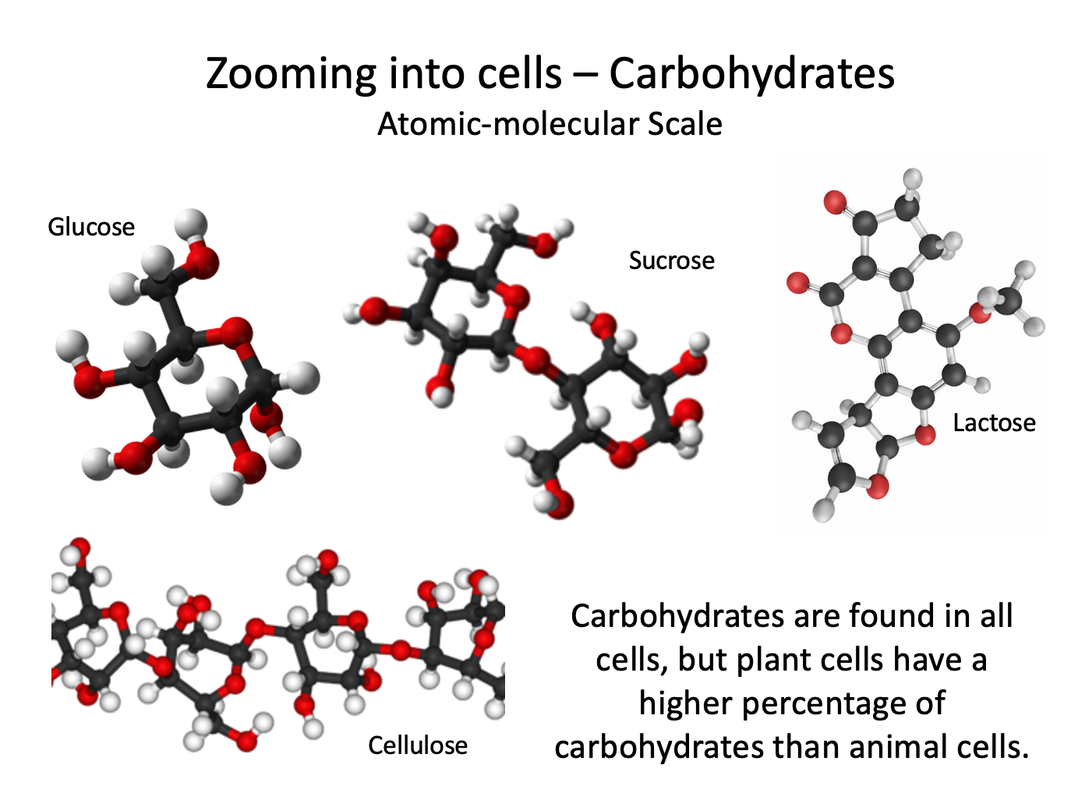
​Carbohydrates are the main energy molecules for living things. They can give cells quick energy or store energy for later use. The smallest carbohydrate units are called monosaccharides, which means “one sugar.” Common examples include glucose, fructose, and galactose. Monosaccharides/sugars are the monomers of carbohydrates. 
When two monosaccharides join together, they form a disaccharide (“two sugars”). Table sugar, or sucrose, is a disaccharide.

When many sugars are bonded together, they form polysaccharides (“many sugars”). Starches are polysaccharides that are made of 100s of glucose monomers. Plants make starches to store extra glucose. Consumers can get starches by eating plants. Our digestive system breaks down starches to sugar, which our cells use for energy. Like other animals, we store any extra glucose as a polysaccharide called glycogen. Glycogen is also a polymer of glucose but it is made by animals rather than plants. Cellulose is another complex carbohydrate found in plants that is a polymer of glucose. Cellulose molecules bundle together to form long, tough fibers. Cellulose makes up the cell walls of plants and gives support to stems and tree trunks.

Carbohydrates also play an important role in the cell membrane. Some carbohydrates attach to proteins, forming glycoproteins (“glyco-” means sugar). These glycoproteins help with cell-to-cell communication, allowing cells to recognize and respond to each other.
​
Carbohydrates can be identified with chemical tests. Benedict’s solution is used to test for simple sugars. When heated, it changes color from blue to orange or red if sugars are present. Iodine is used to test for starch, and it changes from brown to dark blue or purple when starch is present.

Picture
Picture
Picture
Picture

Proteins

Proteins are the most common type of biomolecule in living organisms. Scientists estimate that a single cell contains 42 million protein molecules. Proteins are like the tools of the cell, carrying out most of the work that keeps cells alive.
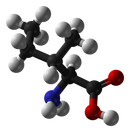
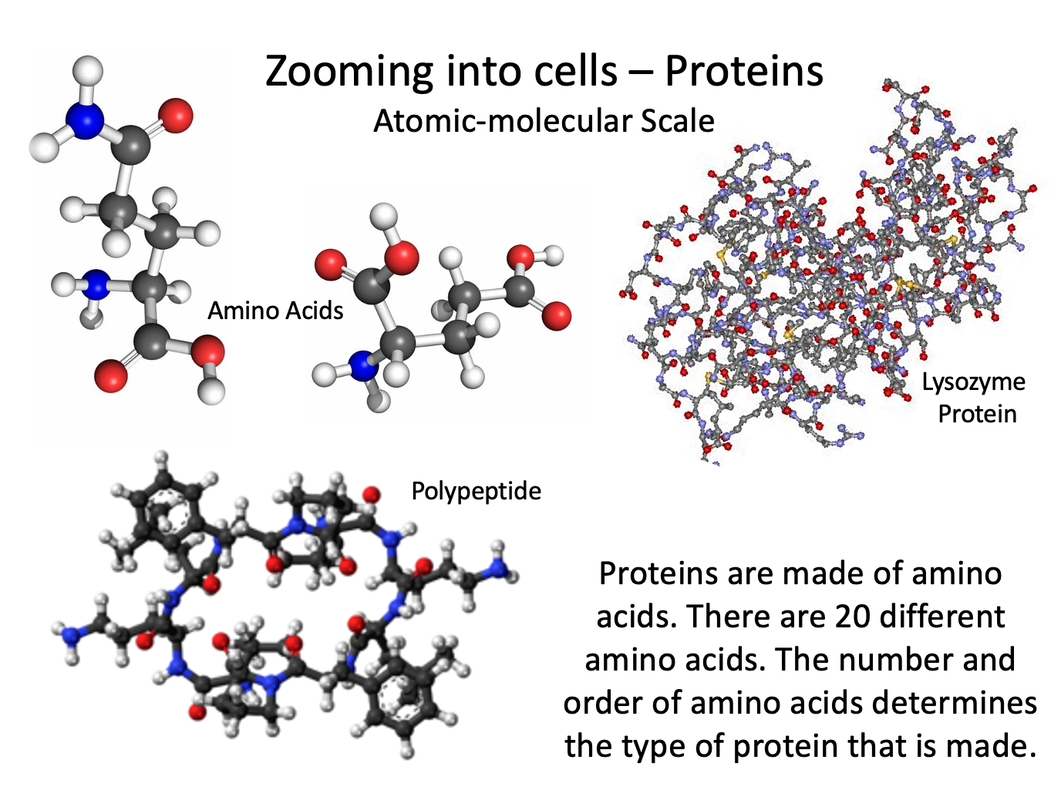
Proteins are made of smaller units called amino acids. There are 20 different amino acids that make up the proteins of most organisms. Each amino acid has the same basic structure: a carbon atom bonded to an amino group (–NH₂), a carboxyl group (–COOH), and a unique side group called the R group. The R group is what makes one amino acid different from another.

When two amino acids join together, they form a bond called a peptide bond. Many amino acids can link together to make a long chain called a polypeptide. Once the polypeptide is complete, it folds into a three-dimensional shape. The exact shape depends on the order and type of amino acids, and this shape determines the protein’s job.

Protein shapes may be very complex. The shape of a protein determines its function. Proteins have many different functions. For example, proteins:
  • make up muscle tissues.
  • speed up chemical reactions in cells.
  • regulate life processes.
  • help defend against infections.
  • transport materials around the body in the blood.
Picture
Picture
Hemoglobin is an example of a transport protein in the blood. The heme parts of a hemoglobin molecule bind with oxygen. Each red blood cell has hundreds of hemoglobin molecules and each hemoglobin molecule can carry up to four oxygen molecules. This is how oxygen is carried in the blood to cells throughout the body.
Some proteins are structural, like collagen in connective tissue or keratin in hair and nails. Other structural proteins, such as tubulin, make up microtubules within cells that structurally supports the cells while also allowing for moving molecules throughout the cell.

​Enzymes are proteins which speed up chemical reactions. Enzymes act as biological catalysts, meaning they help reactions happen faster without being used up in the process. For example, lactase breaks down lactose (milk sugar) into smaller sugars.

Some proteins act as hormones, like growth hormone or oxytocin, which send signals throughout the body. While other proteins, such as antibodies, are integral components of the imune system.
​
Proteins can be tested for with an indicator called Biuret’s solution. If proteins are present, the solution changes color from pale blue to violet.
Picture
Picture
Biurets Test; Left = positive, Right = negative
Picture
Proudly powered by Weebly
  • Home
  • Biology
    • Matter and Energy >
      • Honors Matter and Energy
      • Burning Ethanol Lab
    • Molecules of Life >
      • Biomolecules
      • Digestion Biosynthesis
      • Microscopes
      • Cell Labs
    • Cellular Respiration >
      • Mealworm Labs
    • Cancer and the Cell Cycle >
      • Hematopoiesis
      • HLA Matching
    • The Central Dogma >
      • Double Helix
      • HONORS: DNA to Proteins
      • Yeast Sphere Lab
    • Genetics >
      • Mendelian Genetics
      • Meiosis
      • Pedigree Analysis
    • Evolution >
      • Battling Bacteria
      • Mouse Evolution
      • Speciation
      • Evidence of Evolution
    • Plants >
      • Plant Labs
    • Ecology >
      • Animal Flash Cards
      • Nutrient Cycles
      • Human Impacts on Environment
      • Carbon Pools Reading
  • SEP labs
    • Transformation >
      • Transformation Procedure
    • HLA Sequencing
    • PCR
    • ELISA
    • DNA Extraction Cards
  • Data
    • Graphing
    • Relationships in Data